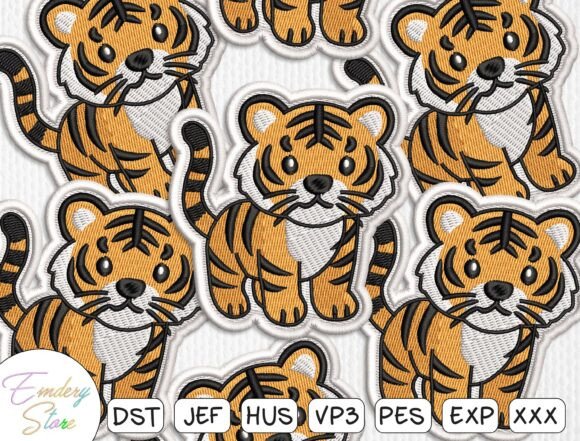
Tiger Patch Embroidery Design Review
As a designer who has spent years navigating the fine line between digital art and stitched reality, I approach every new machine embroidery design with a critical eye. The market is flooded with generic patterns, but occasionally, a file arrives that genuinely sparks an idea for a tangible product. Today, I am evaluating the Tiger Patch Embroidery Design, a piece described as a "cute, cartoon-style baby tiger" meant to bring a playful roar to your projects. Before you download this embroidery file or commit it to a client order, let's break down how it actually performs in a real-world crafting environment.
First Impressions: Mood and Visual Personality
When I first opened the preview of the Tiger Patch Embroidery Design, the immediate reaction was one of warmth. This isn't a fierce, realistic predator; it is a stylized, friendly character that fits perfectly into the Animals category of nursery decor and children's wear. The layout suggests a compact, rounded shape, which is excellent for creating a cohesive embroidered patch or a standalone motif on fabric. The visual personality is undeniably cheerful, relying on bold outlines and simplified features to maintain clarity even when scaled down.
For a craft business owner looking to expand their catalog, this design offers a distinct advantage: versatility. It doesn't scream "holiday specific," yet it works beautifully for birthday gifts, baby showers, or general home decor. The "playful posture" mentioned in the description translates well into a design that feels alive without requiring excessive thread changes. However, the true test of any digital embroidery file is not how it looks on a screen, but how it behaves under the needle.
Real-World Application: From File to Finished Product
To truly understand the value of the Tiger Patch Embroidery Design, I imagined a specific scenario: preparing a custom embroidered tote bag for a local boutique. Tote bags are a staple for Etsy sellers because they offer a large canvas and high utility. In this context, the baby tiger motif would serve as a focal point near the top corner or centered on the front panel.
Because the design features distinctive stripes, the interplay between fill stitch and satin stitch becomes crucial. A successful execution here relies on smooth transitions between the orange body and the black stripes. If the stitch density is too low, the fabric might show through, ruining the solid look of the tiger. Conversely, if the density is too high, the thick cotton canvas of a tote bag could pucker, distorting the cute expression. For a project like this, I would recommend using a heavy-duty stabilizer to ensure the design lays flat and maintains its structural integrity after repeated washing.
Beyond totes, this embroidery project shines on soft goods. Imagine applying it to a sweatshirt for a child's winter collection. The sweatshirt embroidery process requires careful attention to the fabric texture, as fleece can be tricky. The rounded nature of the baby tiger helps mitigate some of these challenges, as there are no sharp, jagged edges that tend to bleed on textured surfaces. Similarly, for baby embroidery items like onesies or bibs, the gentle aesthetic makes it a perfect candidate for a personalized gift. Parents love unique, handcrafted items, and a well-executed tiger patch adds a layer of professionalism that mass-produced prints simply cannot match.
Navigating Challenges: Where Caution is Required
While the Tiger Patch Embroidery Design is versatile, it is not a magic bullet for every situation. As a reviewer, I must highlight where this design needs extra care. First, consider the hoop size. If the design includes intricate details in the face or paws, shrinking it too much for a small hoop can result in lost definition. The stripes might merge, and the eyes could lose their sparkle. Always check the minimum recommended dimensions before attempting to scale it down for a cap or a small pillow cover.
Fabric choice is another critical factor. On thin or stretchy fabrics like jersey knit, the weight of the thread used for the tiger's outline could cause significant distortion. In such cases, I strongly advise testing the design on scrap fabric first. Use a water-soluble stabilizer to see how the stitches pull against the grain of the material. Additionally, while the design looks great on light backgrounds, placing it on dark fabric requires a different strategy. You may need to add a layer of white underlay or switch to an applique design technique where the tiger is cut from felt and stitched onto the garment, rather than relying solely on thread coverage.
Curved surfaces present another hurdle. If you plan to use this for a baseball cap, the curvature can stretch the design horizontally. Ensure your machine software allows for compensation, or opt for a flatter placement area like the side of the brim. Finally, for products that require frequent washing, such as kitchen towels or aprons, verify that the thread colors chosen are colorfast and that the stitching is secure enough to withstand agitation.
Impact on Brand Value and Customer Trust
For the small shop product creator, the quality of your embroidery directly correlates to customer trust. A sloppy, puckered tiger will reflect poorly on your brand, whereas a crisp, well-defined finished product builds reputation. The Tiger Patch Embroidery Design has the potential to elevate your handmade product line if executed correctly. Its charm appeals to a broad demographic, making it a safe bet for inventory that needs to move quickly during the holiday season or back-to-school rush.
Using high-quality design assets like this also enhances your printable mockup presentations. When showcasing your work online, a clean, professional image of the tiger on a mockup sweatshirt or tote bag can significantly increase buyer engagement. Customers want to visualize the final result, and a design with clear lines and balanced proportions photographs beautifully. This visual appeal is essential for commercial embroidery projects where presentation drives sales.
Practical Designer Notes for Success
Before you integrate the Tiger Patch Embroidery Design into your workflow, follow these practical steps to ensure success:
- Test Stitching: Always run a test on a similar fabric scrap to check for puckering and alignment issues.
- Color Contrast: Select thread colors that provide sufficient contrast against your background fabric to ensure the stripes and facial features pop.
- Stabilizer Selection: Match your stabilizer to the fabric weight; heavier fabrics need heavier support to prevent shifting.
- Licensing Check: Confirm the licensing terms before selling finished items. Ensure you have the right to use this embroidery file for commercial purposes if you plan to sell the resulting products.
- Mockup Comparison: Test the design in both black and white and full color to see how the details hold up in different lighting conditions.
In conclusion, the Tiger Patch Embroidery Design is a charming addition to any designer's library, provided you respect its technical requirements. It offers a delightful balance of simplicity and character, making it ideal for custom apparel, holiday embroidery gifts, and boutique merchandise. By paying attention to fabric preparation, stabilizer choice, and stitch settings, you can transform this digital file into a physical product that delights customers and strengthens your craft business.