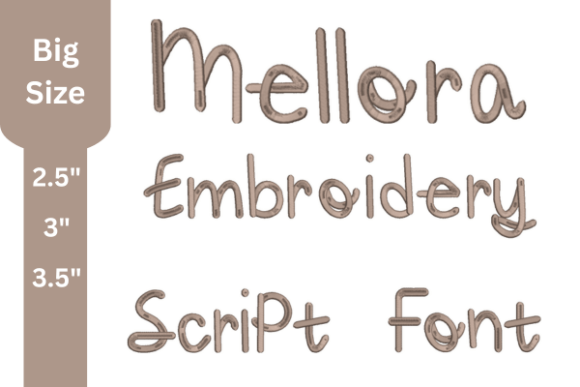
Review: Mellora Font Embroidery for Business
As a professional embroidery designer who has spent years translating brand visions into tangible stitched assets, I approach every new machine embroidery design with a critical eye. When evaluating a font for commercial use, aesthetics are only half the battle; functionality, durability, and scalability determine whether a design succeeds on a high-end uniform or fails on a cheap tote bag. Today, I am reviewing the Mellora Font Embroidery, a digital asset promising smooth stitch quality and consistent readability. For small business owners, Etsy sellers, and apparel decorators looking to elevate their merchandise, understanding how this specific embroidery file performs in real-world scenarios is essential before you commit to production.
First Impressions: A Professional Aesthetic for Modern Brands
The first thing that strikes me about the Mellora Font Embroidery is its promise of "smooth, clean stitch quality." In the world of Embroidery Fonts, this description is not merely marketing fluff; it suggests a digitization process that prioritizes flow over flash. Visually, the name "Mellora" implies a blend of modern elegance and approachable warmth. This makes it an ideal candidate for brands that want to appear premium yet accessible. Whether you run a boutique bakery, a creative studio, or a local florist, your brand identity often hinges on the subtle details of your packaging and apparel. A font that feels too rigid can alienate customers, while one that is too decorative can look amateurish. Mellora appears to strike that delicate balance, offering a polished look suitable for custom apparel without sacrificing legibility.
Performance in Real-World Merchandise Applications
When I test a digital embroidery file like Mellora, I immediately visualize its application across various product lines. For small business merch, versatility is key. Imagine a café needing staff uniforms where the logo needs to be readable from a distance but still look crisp up close. The description notes that each character is carefully created for good readability. This is crucial for apron embroidery and work shirts where names or titles accompany the logo. If the stitching is too dense or the characters too thin, the design will blur after a few washes. Mellora’s focus on consistency suggests it will hold up well under these conditions.
Consider the application of this font on an embroidered patch. Patches are a cost-effective way to add branding to denim jackets, backpacks, and canvas bags. Because the font is described as having clean stitch quality, it should translate beautifully into a woven or embroidered patch format. The edges should remain sharp, preventing the fraying or bleeding that often plagues poorly digitized scripts. Furthermore, for cap embroidery, which involves working on curved surfaces with limited space, a font with consistent stroke width is vital. Mellora seems designed to maintain its integrity even when wrapped around the front panel of a structured hat, ensuring your brand identity remains intact regardless of the viewing angle.
For handmade brands selling on platforms like Etsy, the presentation of the finished product is everything. Using Mellora on a tote bag design or as a label accent on a handmade scarf adds a layer of professionalism that separates a hobbyist from a serious entrepreneur. The ability to create a cohesive look across different materials—from heavy denim to soft cotton—relies heavily on the underlying digitization. If the stitch density is balanced correctly, the design will sit flat against the fabric rather than puckering, which is a common issue with fonts that have varying thicknesses.
Critical Considerations for Production and Scaling
While the potential for Mellora is high, there are specific areas where caution is required. As a designer, I always advise clients to test any new font at the smallest intended size before running a full batch. Even with "clean stitch quality," reducing the size of a script or serif font can lead to gaps in the lettering or thread breakage. If you plan to use this for tiny sleeve details or small product tags, ensure the minimum recommended size is respected. High stitch density in small areas can also cause fabric distortion, particularly on textured fabrics like fleece or heavy twill.
Another critical factor is the choice of thread colors and background contrast. A font that looks elegant in black on white may struggle if used in a light color on a dark uniform. The "consistent stitch" feature helps, but you must still verify that the fill patterns do not leave holes that show the base fabric through. Additionally, when using this for items that require frequent washing, such as restaurant aprons or gym wear, the longevity of the design depends on proper stabilizer usage. Always pair the Mellora Font Embroidery with the appropriate backing to prevent shifting and cracking over time.
Practical Designer Notes for Implementation
- Test in Monochrome First: Before selecting vibrant thread colors, run a test in black and white to evaluate the shape and flow of the letters without the distraction of hue.
- Verify Hoop Size: Ensure your machine's hoop size can accommodate the longest word you intend to embroider. Splitting words mid-line can ruin the aesthetic of a continuous font.
- Fabric Texture Matters: Test the design on the actual material you will use. Smooth cotton behaves differently than knitted jersey or rough canvas, affecting how the stitches lay down.
- Create a Mockup: Use a printable mockup to show clients exactly how the text will look on the garment. This manages expectations and reduces revision requests.
- Check Licensing: Always confirm the commercial licensing terms before using the embroidery file for resale items. Ensure you have the right to reproduce the design on products you sell.
- Compare Design Assets: Place Mellora beside other logos or graphics you are using to ensure visual consistency in weight and style.
Impact on Brand Trust and Customer Perception
In the competitive landscape of commercial embroidery, the quality of your text elements directly influences customer trust. A messy, uneven font on a company cap suggests a lack of attention to detail. Conversely, the clean, professional finish offered by Mellora Font Embroidery signals reliability and quality. When a customer receives a branded gift or purchases a piece of small business merch with crisp, well-executed lettering, their perception of the entire brand elevates. It transforms a simple item into a statement of value.
For product designers and crafters, this font offers a way to standardize their output. Consistency across all design assets creates a recognizable visual language. Whether it is on a handmade product label, a promotional tote, or a staff uniform, the familiarity of the typeface builds recognition. Over time, this visual consistency fosters loyalty. Customers begin to associate the specific look of your embroidery with the quality of your service or goods.
Final Verdict for the Modern Entrepreneur
The Mellora Font Embroidery presents itself as a robust tool for businesses aiming to enhance their physical presence through high-quality textiles. Its emphasis on readability and smooth stitching addresses many of the pain points faced by decorators and shop owners. However, success lies in the execution. By adhering to best practices regarding stabilizers, sizing, and testing, you can leverage this font to create memorable, durable, and professional merchandise. For those ready to take their branding from digital concepts to tangible reality, Mellora offers a reliable foundation for Embroidery projects that demand both style and substance. Always remember to review the specific technical details of the file before your first run, but rest assured that the design philosophy behind it aligns perfectly with the needs of today's discerning market.